Eek…smashing targets!

I am on a massive high. The reason? My sales in August have so far surpassed all previous months, in fact, I’ve sold 1,000 more in August than I did in July. Mental or what?

When I was reading ‘Self-Printed’ by Catherine Ryan Howard, one of her pieces of advice was to set targets as to how many books you want to sell. There should be 3. One modest, one OMG and one absolute, mental, scream from the rooftops. Mine were/are:

  • Aim to sell 200 a month – this would mean it’s ‘selling.’ – Modest
  • Aspire to sell 5,000 in the first 12 months – OMG
  • Top 10 in the Kindle chart – Absolute, mental, scream from the rooftops

I promised myself I’d buy a Macbook if I achieved the OMG one, and I’ve just done it. Will I buy a Macbook? Probably not – at least, not right away. I’ve got Central America to pay for, but even still. I’m a bit gobsmacked.

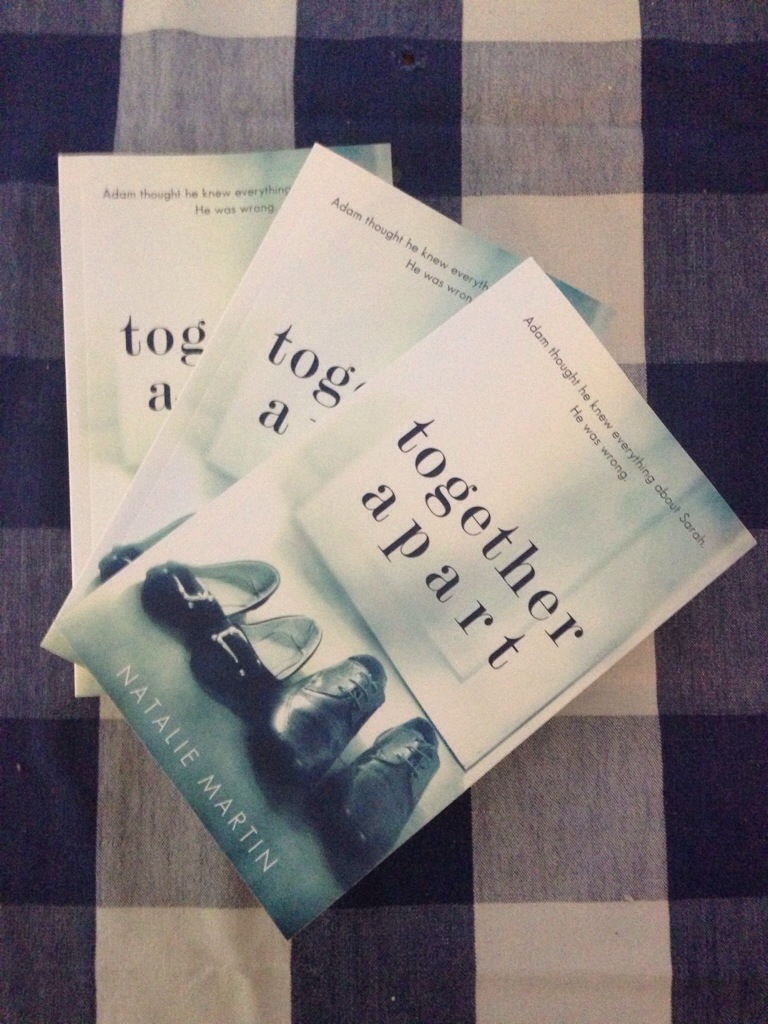
The point of this post isn’t to boast. Anyone who knows me knows I don’t really do that. It’s to hopefully push someone to press the ‘self-publish’ button themselves. I was beyond nervous when I published Together Apart. I was genuinely scared that nobody would even know it was there amongst the many others, let alone like it. I know that it’s normal to feel like that, but I can honestly say that it’s been 100% worth it. It’s not been easy and boy does it still sting when someone leaves a 1* review on Amazon, but I don’t care. I’m grateful that they even read it in the first place, or at least tried to.

That’s what makes being a writer so great and it’s only made me more determined to get the next one out, and make it even better.

Happy days!

Hitting the streets

So, I’d heard of street teams before but never really knew what they were until a couple of weeks ago. I’ve done a bit of research into them and I have to admit, I’m starting to like the idea. It’s more than just a fan club, it’s a way to be a bit more interactive with fans and do some cool stuff. Except, there’s a little part of me that thinks – what if nobody signs up?

Talk about embarrassing.

Heart Shaped Bruise is engaging Wattpadders, to the extent that they’re eagerly awaiting new installments and I think that’s probably because it’s a bit more New Adult than Together Apart was. Not to mention, because of Smith *swoon*. But still.

And then I’ve got to come up with a name. Hmm. But it would be beyond cool. I’ve already got ideas about swag and having engaging fans is a massive motivator, if a bit scary. The fact is though, it’s not like the old days when you’d just get a boring newsletter every so often, fans expect more. They expect interaction and they’re happy and willing to shout about great books.

So. Latest addition to my to-do list:

Start a Street Team.

Name suggestions are more than welcome!

The joys of editing

Editing sucks the big one. Most writers know this. It seems never-ending. But, as annoying as it is, it just has to be done. There are so, so many people self-publishing and despite the success of a huge number of self-published books, there are still a heap of people who look down on the principle of self-publishing. Why? Because anyone can do it. Anyone upload something, slap a cover on it and charge money for it – whether it’s the best book ever written or not.

Of course, what makes a good book is subjective. There are some high profile books I’ve read because they had a huge amount of buzz around them and amazing reviews, and yet, I hated them. Nobody will always like everything. But, aside from hating the story, or the characters, or the setting, it’s far, far, far worse to have someone hate your book because it’s badly edited, if it’s edited at all.

I cannot stress how important editing is. I thought I’d had it covered, but one thing I’ve found out is, the more eyes that pass over your book before you send it out into the world, the better. Because bad reviews based on editing cut much deeper than a bad review because they didn’t like the book for what it was. I had friends (writers and non-writers) look over mine, as well as an actual editor, and there were still errors – missing words, that kind of thing. And while some people might overlook that, you’d best believe there are a heap of people who won’t. After pulling my hair out, I think I’ve finally got there.

So, you’ve slogged away, turning that spark of an idea into a story. You’ve actually managed to finish it too, but what now? First, understand what editing actually is. Because it’s more than having someone look over your book and red circle it.

DIY

I cannot help but edit, and I cannot help but do it as I’m going along. Obviously, you’re going to be the first one in the process, but by the time you’ve written THE END, you’ll probably be a) sick of looking at your manuscript and b) too familiar with it to spot the missing words, the double ‘the’s and other such irritations.

Structural Editing

Structural editing is when someone looks over your entire story and basically sees if it makes sense or whether it’s all disjointed and confusing. They’ll appraise the characters, the chapters, the pace, and the narrative. My editor told me she hated the ending of Together Apart (I’d changed it literally days before I sent it to her), but she knew her stuff and explained why. After I took some time to cool down, I could see that actually, she was right, and so I rewrote it. You might think your story is perfect and makes perfect sense, but of course you do. You wrote the thing. Point is, you don’t want to have someone buy it and get to the end thinking ‘what was the point? what actually happened to Gina and her rabid dog?’ It needs to make sense overall. Structural editing  is ordinarily done by someone else, and that someone else will charge, unless you’ve got the hook up somewhere. It could be uber cheap, or horrifically expensive, but you must find someone familiar with your genre. I think there’s little point in going for an editor who works with horror if you’ve written erotica. You can usually send off a sample and see what they come back with, but bear in mind, you won’t really see the payoff until they’ve read the whole thing.

Line Editing

Ok, we’re starting to get to the nitty gritty. A line editor (and you might use the same person for all steps in the process) will go through every single sentence and point out any that don’t read correctly, that are confusing, that are awkward, too flowery or don’t pack the punch you were quite aiming for.

Copy Editing

Copy editing looks at those annoying things you might have missed. Typos, grammatical errors, inconsistencies and punctuation. Basically, an enhanced version of what you’d have done yourself up until this point.

There are a LOT of editors out there, and I’d suggest trying to go for someone you’ve had recommended because it ain’t always cheap. And, I’d also suggest you rope in some friends and family to proof-read too. The more people who read it the better. And when you do finally get your book out there, I’d heavily suggest you buy it, download it to your e-reader and give it another read through because despite the steps I went through, I still found errors at this point. The joy of ebooks is you can always upload a new version with the rectified errors, but trust me, it’s better to get them out of the way first.

Oh, and good luck!

SOS from the depths of formatting hell

I love writing. It’s not always easy, though. I’m not someone who wakes up in the middle of the night with a eureka storyline, oh no. More likely, an idea pops into my head at the most random of times, like buying tomatoes. I love creating scenarios where people can do whatever I want them to do (control freak? moi?). I love the endless possibilities of it all. What I don’t love, is formatting.

I mean, honestly. Who ever  heard of using ‘styles’ in Word to format a document? Seemingly everyone else apart from me – that’s who. It was a right royal pain in the backside, but it wasn’t too tricky in the end. I almost had a celebratory glass of wine – until it came to paperback formatting.

frustration

I honestly don’t think there’s a better form of torture. For 3 days, I stayed up until way, way past my bed-time, trying to figure it all out. Page breaks, section breaks, blank pages, and page numbering…God, the page numbering.

Is it just me? Did anyone else find this insanely difficult? Maybe its because I break out in hives whenever I have to use footers in Word, but I just couldn’t get my head around it at all. Well, okay, I couldn’t get my head around it until I realised I was doing it wrong.

Facepalm.

What made it worse, was that I was following instructions written in a way that anyone could understand. Maybe I just have a penchant for overthinking things to the point of them making no sense at all, whatsoever.

There is one consolation though. At least when it comes to my next book, I’ll be a dab hand. Or at least, I hope so, otherwise I’ll have no hair left. Maybe there’s some kind of support group for formatting-scarred writers. If there isn’t one, there should be.

But, I guess it’s not all bad. I’m a step closer to my goal of getting it out in paperback. It’ll all be worth it in the end.

Right?